

Last Updated: November 1, 2026
Quick Summary
Durable river fishing gear is worth the cost because buying cheap gear and replacing it every season costs more per year than investing once in equipment that lasts. A budget rod that snaps after two seasons costs more annually than a well-built rod that holds up for a decade, and the same goes for waders, line, and reels.
- Match rod length and action to your water: short and sensitive for tight streams, longer and stiffer for wide runs.
- The Hankyu Middle Fork Triple Zoom Tenkara Rod fishes at 9, 10.5, or 12 feet and costs $175.
- Shorten leaders and use heavier tippet as current and rock increase, and lengthen them again in clear, slow water.
- Rinse rods, reels, and waders with fresh water after every trip, then dry everything fully before storage.
- Buy the middle tier first: an all-around trout kit covers the most water and species.
Table of Contents
- What Durable River Fishing Gear Actually Costs You
- The Best Fishing Rod for River Fishing: Matching Length and Action to Current
- River Fishing Tackle: Line, Hooks, and Terminal Gear That Survive Abrasion
- Your River Fishing Gear Checklist Before the First Cast
- Waders, Landing Nets, and Storage That Hold Up Season After Season
- How to Maintain Fishing Gear After Every River Trip
- Complete Setups by Species and Budget
- Build Your River Kit at Forest Field & Sky
- Frequently Asked Questions
What Durable River Fishing Gear Actually Costs You
Buying cheap and buying twice is the most expensive habit in river fishing.
Here is the honest math. A budget rod that snaps after two seasons costs more per year than a well-built rod that holds up for a decade.
Below, we break down where the money actually goes, which pieces matter most, and how to build a river kit that survives seasons of rock, gravel, and fast current.
Quick picks for a durable river setup:
- Best for tight water: Hankyu Middle Fork Triple Zoom Tenkara Rod, $175
- Best all-around fly setup: Cutthroat™ Fly Rod/Reel Outfit, $300
- Best for wide runs: RodZilla 16'/17'6" Double Zoom, $200
- Best small-stream spinning rod: Vulcan Ultra-Light, $169.99
The Best Fishing Rod for River Fishing: Matching Length and Action to Current
The best fishing rod for river fishing matches the water you fish: short and sensitive for tight, brushy streams, longer and stiffer for wide runs with heavy current.
Rod action describes how much the rod bends under load. A 5:5 action flexes through most of the blank, which protects light tippets and small flies.
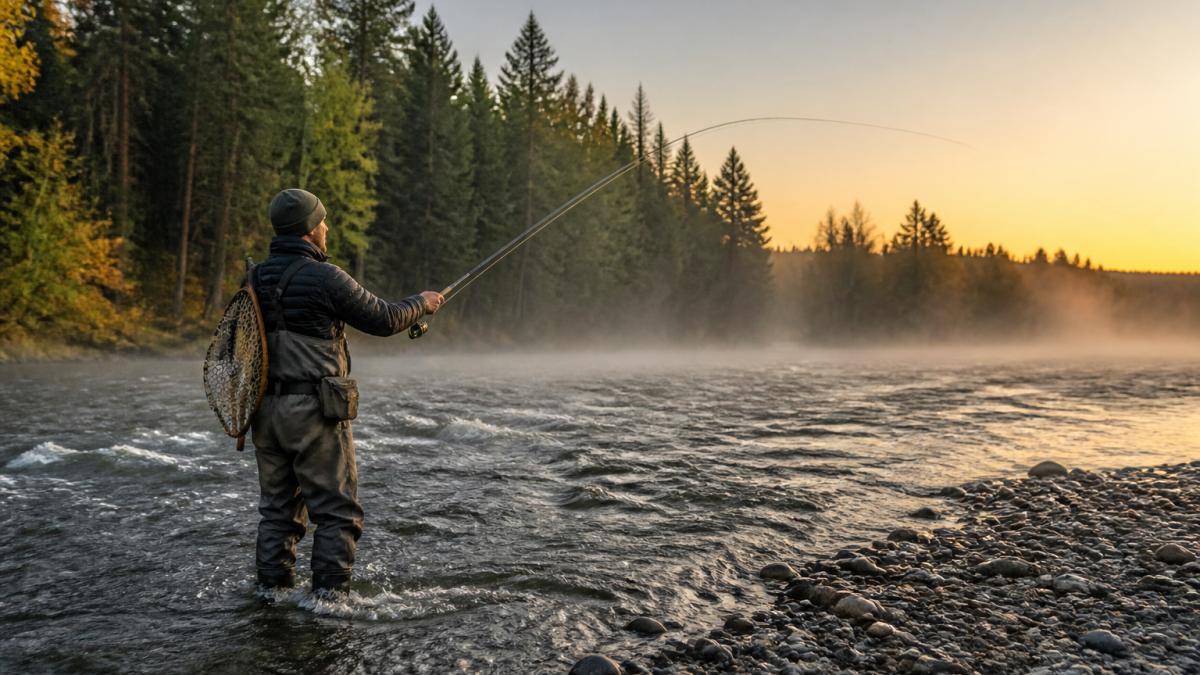
Tenkara and Fly Rods for Tight Water
Tight water rewards a rod that collapses small and casts precisely. The Hankyu Middle Fork Triple Zoom Tenkara Rod 9-12 ft fishes at 9, 10.5, or 12 feet, so one rod covers pocket water and open pools.

If you want a complete fly setup, the Cutthroat™ Fly Rod/Reel Outfit pairs a rod, reel, and matched line for $300. The 8'6" 4-weight suits smaller rivers and delicate drifts, while the 9' 5-weight is the all-around trout choice.
Spin and Big-Water Rods for Wide Runs
Wide runs call for reach and backbone. The Vulcan Ultra-Light Small-Stream Spinning Rod weighs 2.8 ounces and packs into four sections for $169.99, ideal when you are hiking miles to fish.

When you need to cover big water, the RodZilla 16'/17'6" Double Zoom 8:2 Tenkara Rod extends to 17'6" and handles large freshwater species for $200. Match the rod to the fish you are actually chasing.

| Rod | Price | Best Water | Action |
|---|---|---|---|
| Hankyu Middle Fork Triple Zoom | $175 | Tight streams to open rivers | 7:3 or 6:4 |
| Cutthroat™ Outfit | $300 | Small to mid rivers | Moderate |
| Vulcan Ultra-Light Spin | $169.99 | Small streams, fast-packing | Fast |
| RodZilla Double Zoom | $200 | Wide runs, big fish | 8:2 |
River Fishing Tackle: Line, Hooks, and Terminal Gear That Survive Abrasion
River fishing tackle fails at the weakest point, and on rivers that point is almost always abrasion. Rocks, gravel, and sunken wood grind line and leaders down faster than any lake. Durable terminal tackle is less about fancy materials and more about matching construction to the conditions you fish and replacing worn components before they cost you a fish.
Line Strength, Leaders, and Drag Settings
Match line strength to the current and the fish, not to the maximum your rod can handle. Fast riffles and sharp rock call for heavier line and shorter, tougher leaders.
Line material matters as much as line weight.
Leader length should shrink as current and rock increase. A long, delicate leader that works on a glassy pool will fray in a boulder garden.
Hooks, Swivels, Sinkers, and Flies
Inspect hooks after every snag. A hook point that rolls over on rock will not set, no matter how well you cast.
Swivels prevent line twist, especially when you are drifting bait or casting spinners in current.
Flies and lures should match the hatch and the water clarity, but durability matters too. Cheap hooks rust and bend, while quality terminal tackle survives a full season.
Your River Fishing Gear Checklist Before the First Cast
A river fishing gear checklist prevents the two most common trip-killers: forgotten essentials and gear that fails on the water. Run through this before you leave the truck.
- Rod inspected for cracks, especially at the ferrules
- Reel drag tested and set for current
- Fresh line and spare leader material
- Hooks sharpened and rust-free
- Waders checked for leaks at seams and boots
- Landing net with a rubberized bag
- Layered clothing for cold water and wind
Waders, Landing Nets, and Storage That Hold Up Season After Season
Durable waders and storage decide whether your gear survives to next season. Seams and booties are the first things to fail, so buy breathable waders with reinforced seams and store them dry and out of sunlight.
Cold-water anglers should layer properly under waders rather than buying the thickest single layer. Our guide on how to layer for winter fishing covers the base, mid, and outer layers that keep you functional when water and air are both cold.
Storage matters as much as the gear. Hang waders, loosen reel drags, and store rods in sleeves. A tackle box kept dry and organized prevents rust and lost trips.
How to Maintain Fishing Gear After Every River Trip
How to maintain fishing gear comes down to a simple routine: rinse, dry, inspect, and store. River grit and moisture do the most damage, and both are easy to remove.
- Rinse rods, reels, and waders with fresh water after every trip.
- Dry everything fully before storage, especially waders and line.
- Inspect line and leaders for nicks, then cut back or replace.
- Sharpen or replace hooks and check swivels.
- Loosen reel drag and store rods in sleeves.
Watch out: storing wet waders in a hot car breaks down seam tape fast. Dry them at room temperature instead.
Complete Setups by Species and Budget
Complete river setups often fall into three rough tiers: a compact stream kit, an all-around trout kit, and a big-water kit. The pairings below are starting points, not rules, but each one keeps rod, reel, line, and terminal tackle in balance so no single component becomes the failure point.
Entry-Level Stream Kit
A compact tenkara or ultra-light spinning rod, light line, small hooks, and a rubberized net suit small trout and tight water on a modest budget. Pair a 9- to 12-foot tenkara rod with a level line and a few feet of 5X tippet, or an ultra-light spinning rod with 4- to 6-pound monofilament and small spinners or bait hooks. Keep the net small and rubberized so it protects fish and packs easily.
All-Around Trout Kit
A 9-foot 5-weight fly outfit or a versatile spinning rod, matched reel, floating line, and a range of flies and lures covers most river situations. Pair the fly rod with a reel sized to the line weight, a weight-forward floating line, and 4X to 5X tippet for most dry-fly and nymph work. A spinning version pairs a medium-light rod with 6- to 8-pound line and a small selection of spinners, spoons, and bait rigs.
Big-Water Kit
A long, powerful rod like the RodZilla or Phoenix Rising, heavier line, and a larger net suit bigger species and wide runs. Pair the rod with a reel that has a smooth, durable drag, heavier tippet or line, and terminal tackle rated for the fish you expect. A larger rubberized net and a wading staff round out the kit. Take Me Fishing's beginner tackle guidance is a useful reference for matching line and rod weight.
Matching the Kit to the Water
Current speed, depth, and clarity should drive the final choices. Fast, shallow riffles favor shorter, heavier leaders and enough weight to stay in contact with the bottom. Deep, slow pools allow lighter line and longer leaders. Clear water calls for lighter tippet and more natural presentations, while stained water lets you use heavier line and brighter lures. Build the kit around the water you fish most, then add one specialized rod for occasional conditions.
Build Your River Kit at Forest Field & Sky
Durable river fishing gear can outlast cheaper alternatives. The rod that does not snap, the waders that do not seep, and the line that does not fray all keep you fishing instead of shopping.
At Forest Field & Sky, we stock rods built for exactly this: the Hankyu Middle Fork Triple Zoom for tight water, the Cutthroat™ Outfit for all-around trout fishing, and the RodZilla for big runs.
Frequently Asked Questions
What fishing gear do you need for river fishing?
A workable river kit covers a rod matched to the water, a reel with a smooth drag, abrasion-resistant line, hooks and terminal tackle, lures or flies, a tackle box, waders, and a landing net. Add a river fishing gear checklist so nothing gets left in the truck: spare leaders, split shot, nippers, forceps, and a towel. Buy durable river fishing gear once rather than replacing cheap line and hooks every few trips, since current and rocks wear tackle faster than still water.
What type of fishing rod is best for river fishing?
It depends on the water. Tight, brushy streams fish well with a short tenkara or 3-weight fly rod that loads in close quarters. Wide runs with strong current call for longer reach, such as an 8:2 tenkara rod or a 9-foot 5-weight fly rod. For fast-packing into small streams, a four-section ultra-light spinning rod packs down and still casts accurately. Match rod action to the fish you expect, not to the biggest fish in the river.
What size reel is best for river fishing?
For most river trout and bass, a 1000 to 2500 size spinning reel or a 3 to 5 weight fly reel covers the range. The reel matters less than the drag: it needs to give line smoothly when a fish runs into current. On bigger water or for salmon and steelhead, step up to a 3000 size or a 7 to 8 weight fly reel with more backing capacity. Check that the drag adjusts in small increments rather than jumping from locked to free.
How should you clean and maintain fishing gear after river fishing?
Rinse rods, reels, and line with fresh water and dry them fully before storage, since grit and silt wear guides and drag washers. Wipe rod ferrules clean, check line for nicks and abrasion, and cut back or replace damaged leaders. Store rods in their cases, keep tackle boxes dry, and hang waders to air out. Re-lubricate reel drags and handles per the manufacturer's guidance, and inspect hooks for rust before the next trip.
What makes fishing gear durable?
Durable river fishing gear shares a few traits: carbon fiber or quality composite blanks that resist nicking, corrosion-resistant guides and hardware, sealed or serviceable drags, and line with high abrasion resistance. The Baby RodZilla at $165 and the Hankyu Middle Fork at $175 are tenkara rods; the Hankyu Middle Fork is built from premium carbon fiber. Storage matters too, since a rod kept in its case and rinsed after each trip outlasts one left in a hot truck.
The river will test your gear every trip. Build a kit that holds up. Get started with Forest Field & Sky and fish with equipment that lasts.
