

Table of Contents
- How a Hunting Layering System Actually Works
- Step 1: Pick the Best Thermal Base Layers for Hunting
- Step 2: Choose a Hunting Mid Layer for Insulation
- Step 3: Add a Hunting Outer Layer for Weather Protection
- Layering Plans by Temperature and Activity Level
- Managing Sweat, Ventilation, and Layer Order
- Cold Weather Hunting Clothes: What to Wear and Pack
- Conclusion
- Frequently Asked Questions
Last Updated: October 19, 2026
How a Hunting Layering System Actually Works
Learning how to layer for hunting comes down to one principle: control your body heat with several thin, adjustable layers instead of one heavy coat.
A hunting layering system is a three-part clothing stack, a base layer that moves sweat off your skin, a mid layer that traps warmth, and an outer layer that blocks wind and precipitation. Each piece handles one job, and you add or remove them as conditions change.
Why Three Layers Beat One Heavy Coat
One heavy coat gives you two settings: on and off. That is a problem when you hike in sweating and then sit still in freezing air. Three layers give you a dial. The National Weather Service wind chill guide explains why this matters: wind strips heat from exposed skin fast, and a windproof shell over insulation stops that loss without bulk.
Step 1: Pick the Best Thermal Base Layers for Hunting
Start with the best thermal base layers for hunting you can find, because everything above them depends on a dry foundation.
Fit matters more than most hunters realize. The base layer should sit snug against the skin, with no loose folds that trap sweat. Look for flat seams and a cut that lets you raise a rifle without the hem pulling free.
Merino Wool vs. Synthetic Fabric
Merino wool regulates temperature well, resists odor over multiple days, and stays warm even when damp. Synthetic fabric, usually polyester, dries faster and costs less, but it holds odor and feels cold once soaked.
- Merino wool: best for stationary hunting, multi-day backcountry trips, and cold weather
- Synthetic fabric: best for active movement, warm weather, and budget-conscious setups
- Blends: split the difference, with wool against the skin and polyester adding durability
Step 2: Choose a Hunting Mid Layer for Insulation
A hunting mid layer traps the heat your body produces. This is your insulation layer, and it should be the most adjustable part of the stack. Pick a midweight option for cool mornings and a heavyweight one for deep cold.
Fleece, Grid Fleece, and Puffy Jackets
Each mid layer material solves a different problem:
- 100-weight fleece: light, breathable, ideal for active movement and mild days
- Grid fleece: channels that vent heat during the climb while keeping warmth at rest
- Puffy jacket: the warmest option for stationary hunting, and the most packable
A common mistake is wearing a puffy jacket on the hike in. You will overheat within minutes. Save it for the stand, and pack it instead of wearing it.
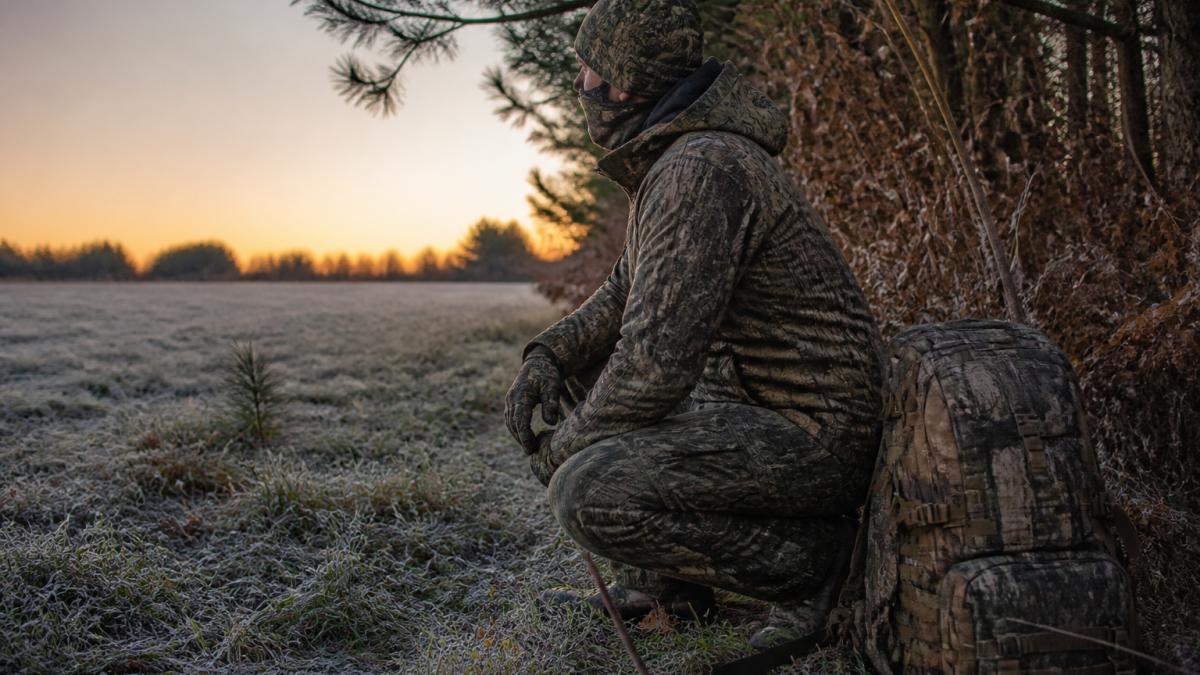
Step 3: Add a Hunting Outer Layer for Weather Protection
Your hunting outer layer handles wind protection and precipitation, and it should be the piece you trust most when the weather turns. A good shell blocks wind, sheds light rain, and stays quiet.
Wind, Rain, and the Quiet Factor
Noise is where most outer layers fail hunters. Stiff, crinkly fabric spooks game at close range. Our Hunting Jacket for Men is built for this: the fabric rubs against itself with minimal sound, and the underarm ventilation zippers let you dump heat without stripping down. The matching Hunting Pants for Men use a fleece-lined soft shell that repels light rain and snow while staying quiet in brush.


Layering Plans by Temperature and Activity Level
Use these plans as a starting point, then adjust for wind, precipitation, and how much you move. The table below gives concrete outfit combinations by temperature range; the sections after it explain how to shift the same stack as your activity level changes through the day.
Step-by-Step Outfit Plans by Temperature Range
| Temperature Range | Base Layer | Mid Layer | Outer Layer | Pack Extras |
|---|---|---|---|---|
| 60°F and above, active | Lightweight synthetic short sleeve | None | Packable wind shell in the pack | Spare lightweight base layer |
| 45-60°F, active | Lightweight merino long sleeve | 100-weight fleece | Soft-shell, pit zips open | Light rain shell |
| 30-45°F, mixed activity | Midweight merino | Grid fleece | Soft-shell, vents adjustable | Puffy jacket for sits, beanie |
| 15-30°F, stationary | Heavyweight merino | Grid fleece plus puffy jacket | Windproof shell | Puffy pants, heated gloves, spare base layer |
| Below 15°F, stationary | Heavyweight merino plus synthetic liner | Grid fleece plus puffy jacket and pants | Windproof shell | Heated jacket or pants, hand warmers, dry base layer |
Treat these ranges as bands, not rules. A 40°F morning with 15 mph wind feels closer to 30°F, so add the puffy jacket earlier than the table suggests. A calm, sunny 40°F afternoon may let you drop to a base layer and shell while hiking.
Warm Weather vs. Cold Weather Hunting
In warm weather, keep it to a base layer and a shell you can stash. Overheating is the bigger risk, and a lightweight synthetic base layer plus a packable wind shell handles most 60°F-plus hunts. Heated gear earns its place here: our Heated Hunting Jacket runs five carbon fiber heating zones on a 12V battery, so you can add warmth without adding bulk.

Layering by Hunt Phase: Hike, Glass, Sit, Return
This is the split most guides miss. The same stack should be worn differently in each phase of the hunt:
Hunting Pants for Men Camouflage Clothing Gear Windproof Fleece Lined for Winter →
- Hike in: Start slightly cool. Wear the base layer and a breathable mid layer with pit zips open, and leave the puffy jacket in the pack. You will warm up within the first 10 minutes of climbing.
- Glass and spot: Add the mid layer back as soon as you stop moving. Open vents if you are in the sun, close them if the wind picks up.
- Sit: Full insulation. Puffy jacket and pants on, shell zipped, hood up, gloves on. Your body is producing far less heat than it was on the hike, so the layers that were too warm on the climb are now barely enough.
A common pattern is to carry the puffy layer rather than wear it, then add it the moment you stop moving. That single habit prevents both the sweat-soaked climb and the shivering sit.
Managing Sweat, Ventilation, and Layer Order
Sweat is the enemy of warmth. Manage moisture and the rest of the system works; ignore it and no amount of insulation saves you. Vent early, before you are soaked.
Why Layer Order and Fit Matter
The layer order never changes: base against skin, mid layer over it, shell on the outside. Get that sequence wrong and wicking breaks down. A base layer worn loose traps sweat against the skin instead of moving it outward, and a mid layer that is too tight compresses the insulation and eliminates the dead air space that actually holds warmth.
Ventilation: When to Open, When to Close
Open pit zips and chest vents on the climb, then close them when you slow down. A common pattern is to vent before you feel hot, not after. If you wait until you are sweating, you have already soaked the base layer. On a steady climb, open vents at the base of the hill and close them at the top.
Wet-Weather and Drying Strategy
Rain, snow, and damp insulation are where layering systems fail. A wet puffy jacket loses most of its loft and stops trapping heat, so keep it dry even if that means carrying it in a stuff sack until you stop moving. For wet-weather days, pack a dry base layer and change into it at the stand. Hang damp layers overnight; never ball them up wet.
Troubleshooting Common Layering Problems
- Overheating on the hike: You left the puffy layer on. Strip it before the climb, not after you sweat through.
- Chilling at the stand: You did not add insulation fast enough when you stopped. Add the puffy layer within the first minute of sitting.
- Cold feet and hands: Your core is under-insulated. Add a mid layer before adding thicker gloves.
Cold Weather Hunting Clothes: What to Wear and Pack
Cold weather hunting clothes should be built around the three-layer stack, with extras that protect extremities and a plan for drying gear overnight. Hands and head lose heat fast, so treat gloves and a beanie as part of the system, not accessories.
Our Heated Gloves heat within seconds and keep your fingers functional for a trigger or a release. For the deepest cold, our Heated Hunting Pants put five heating zones on the thighs, waist, and knees.
Conclusion
The hardest part of layering is not buying gear, it is resisting the urge to wear all of it at once. Build the stack, adjust it as you move, and keep a dry base layer in reserve. Forest Field & Sky carries windproof, quiet camouflage clothing and heated apparel built for exactly this system, from fleece-lined pants to battery-powered jackets.
Frequently Asked Questions
What is the 3-layer rule for hunting clothing?
The 3-layer rule means wearing a base layer against your skin to move sweat away, a mid layer for insulation, and an outer layer to block wind and precipitation. Each layer does one job, so you can add or remove pieces as temperature and activity change. On a cold morning you might wear all three walking in, shed the mid layer on the hike, then add it back once you sit. This stack is the foundation of any layering system for hunting.
What are the best thermal base layers for hunting?
Merino wool and synthetic fabrics are the two main choices. Merino wool manages moisture well, resists odor, and stays warm when damp, which suits multi-day backcountry trips. Synthetics like polyester dry faster and cost less. Match the weight to the season: a lightweight base layer for active early-season hunts, midweight for cool mornings, and heavyweight for late-season sits. Avoid cotton entirely because it holds sweat and pulls heat away from your body.
How do you stay warm while sitting still during a hunt?
Sitting still is when you lose heat fastest, so plan for it. Pack an extra insulation layer such as a puffy jacket or puffy pants and pull it on once you stop moving. Heated apparel helps here too, like a battery-powered jacket with carbon fiber heating zones that warms your core without bulk. Add a beanie, warm gloves, and a sit pad. Eat and drink something before the sit so your body has fuel to generate heat.
How should you adjust layers when hiking to a hunting spot?
Start the hike slightly cool and remove layers before you sweat. Open pit zips and ventilation zippers on your outer layer, unzip the mid layer, and strip down to your base layer if the climb is steep. Sweat is the enemy in cold weather because wet fabric drains heat once you stop. When you reach your spot, cool down briefly, then add layers back in reverse order before your body temperature drops.
What should you wear over base layers for hunting in wet or windy weather?
A windproof, water-resistant outer layer is the answer. Look for a soft shell or jacket with a durable water repellent finish that sheds light rain and blocks wind, which is what strips heat from your core. Quiet fabric matters too, since noisy material can spook game as you move. Ventilation zippers under the arms let you dump heat on the walk in without removing the jacket, and a roll-away hood keeps rain off your neck.
How can you keep hunting clothes quiet while layering?
Choose fabrics that rub together without rustling. Soft shell material, fleece, and brushed polyester are much quieter than crisp nylon or hard-shell laminates. Test layers by moving your arms and legs before the season starts. A quiet outer layer with a soft fleece lining reduces noise as you walk through brush, and camo patterns that mimic the field help you stay hidden. Quiet gear lets you get closer to your prey.